- I Have a Ribcage; You Have a Ribcage
- Posts
- Reading, Travelling, and Seeing Art To Feel Like Myself
Reading, Travelling, and Seeing Art To Feel Like Myself
A March round-up of art, reading, and thinking
JESSE ROTH
March 27, 2026
Reminder that once a month, this newsletter publishes I Will Always Love You, an advice column for creative collaborations (inspired by Dolly Parton herself). I’m looking for questions about your love affair with your lighting designer, your jealousy of your conservatory classmate, your long-distance literary penpal angst, and much more. You can read more about the inspirations for this column here, and you can submit a question here.
It’s easy to forget how both reading and travel transform me when I go too long without them (though “too long” is a vastly different interval for each). This month, I felt a sweet return to both, grounding me powerfully back in a sense of self.
In January, I attempted to read Moby Dick, as part of the Bluesky challenge #MonthOfDick. I started out tearing through the book: “Why didn’t anyone tell me it was such a page-turner?!” I asked anyone who would listen (frankly, humblebragging about being so literary). But January turned to February, and about 65% of the way through the book, my momentum started flagging. Unsurprisingly, after putting it down, my reading roared back like the head of a hydra, many, many books simultaneously replacing that one stubborn monstrosity. I feel much more like myself with this reading diet.
Similarly, I used to travel tons: In my late twenties, between theatre gigs in Miami, teaching theatre at a camp in the mountains of Colorado, and a long-distance boyfriend in the Northeast, I was gone from Chicago about 40% of the time. Since the pandemic and returning to Seattle, my hometown, I’ve only left the Pacific Northwest a couple of times. This month, I took a theatre “business trip” to Washington D.C., and I tacked on a weekend in Philadelphia to visit a dear friend. I loved Philadelphia, and felt a misty, grief-y longing at being in a real city (Seattle, unfortunately, has the cost of living of a major city, but pretty provincial art, transit, and density). I’ve missed subways and old buildings and hubbub. I missed neighborly energy—and sadly noticed that mine has atrophied some, after all these years in the unfriendly Seattle freeze. On my last day there (a surprising 70-degree day!), I sat at a street-side cafe in Italian Market, people-watched, and read my cowboy romance novel. The sun hit my face, and I felt like myself in a way I hadn’t known I was missing.
In Philly, DC, and back home, I saw some very cool art. Excited to share it with you!
Still/Here by Bill T. Jones/Arnie Zane Dance Company, at Meany Hall in Seattle
My date and I leafed through the program as we waited for the show to start, and we realized that neither of us knew who Arnie Zane was. I have deeply loved two works I’ve seen from Bill T. Jones, What Problem? and The Motherboard Suite, but I’m enough of a novice to the dance world that I didn’t know anything about the man who formed the second half of his company name. “It was his partner,” I said, after a quick Google search, “who died of AIDS.” The lights fell.
More than thirty years ago, in 1994, Bill T. Jones premiered Still/Here, a work researched through “survival workshops” with people facing life-threatening illnesses. In these workshops, participants composed gestures, words, and video snippets which became the palette for the eventual dance piece (the 1994 program note dedicates the performance to them). The piece is not exclusively about the AIDS crisis—participants were facing many kinds of illnesses—but the epidemic clearly loomed large to its audience in 1994. Jones, who is HIV positive and had lost his partner to the disease just a few years earlier, was using the dance piece as a way to contend with mortality: “For me, as a person who has to deal with his own possible early death,” Jones said in a documentary in 1997, “I was looking at people who were dealing with the same thing…let’s go out and be with the people who know, who are front-line.”
When the piece premiered, it became a flashpoint because of a piece of “criticism”: an essay from dance critic Arlene Croce in the New Yorker, which began with “I have not seen Bill T. Jones’s ‘Still/Here’ and have no plans to review it.” The thesis of this non-review was that Jones’ work was a piece of manipulative “victim art,” an endemic and powerful “mass delusion” that she says had overtaken the cultural sector. She argues that minority groups have effectively blackmailed the NEA and arts philanthropists to support “utilitarian,” political art. Further, she argues (racist-ly) that these works are aggressively, “violently” “backtalk[ing]” to critics, “effectively disarm[ing] criticism.” This sparked a flurry of responses from intellectuals like Joyce Carol Oates and Susan Sontag. It feels like a Twitter beef, but played out in legacy media. Croce’s essay is a pretty unhinged piece of writing. It’s so insensitive that I found myself gripping my chest while reading it in a café. Unfortunately, this theory of art pre-figures some of the very real right-wing governmental actions in the present—like the DOGE bros gutting grants for any art made for or about marginalized people.
Still/Here is ultimately a dance piece about ghosts. It’s haunted by the ghosts of the dead who offered their words, images, and gestures to the dance. It’s also haunted by the backlash of decades-old reactionaries, emboldened in this moment with the power of the state. In his program note, Jones wrote that “‘the steps’, stay true to 1994, but the hearts, the minds and understandings of the issues informing the work cannot help but be different.” The highlight of the piece, for me, was a sequence in which the stage descends into darkness, and the dancers perform, lit only by flashlights. The piece thrives in its use of repetition, remixing a few dozen gestures and images in complex and kaleidoscopic ways. It was particularly satisfying to see these gestures and movements performed in the dark—like Greek heroes entering Hades, before returning, for now, to the land of the living. Performance is ephemeral, so these ghosts have been laid to rest these thirty years; what a tribute to revive them again onstage.
Good Bones, by James Ijames, at The Arden Theatre, Philadelphia
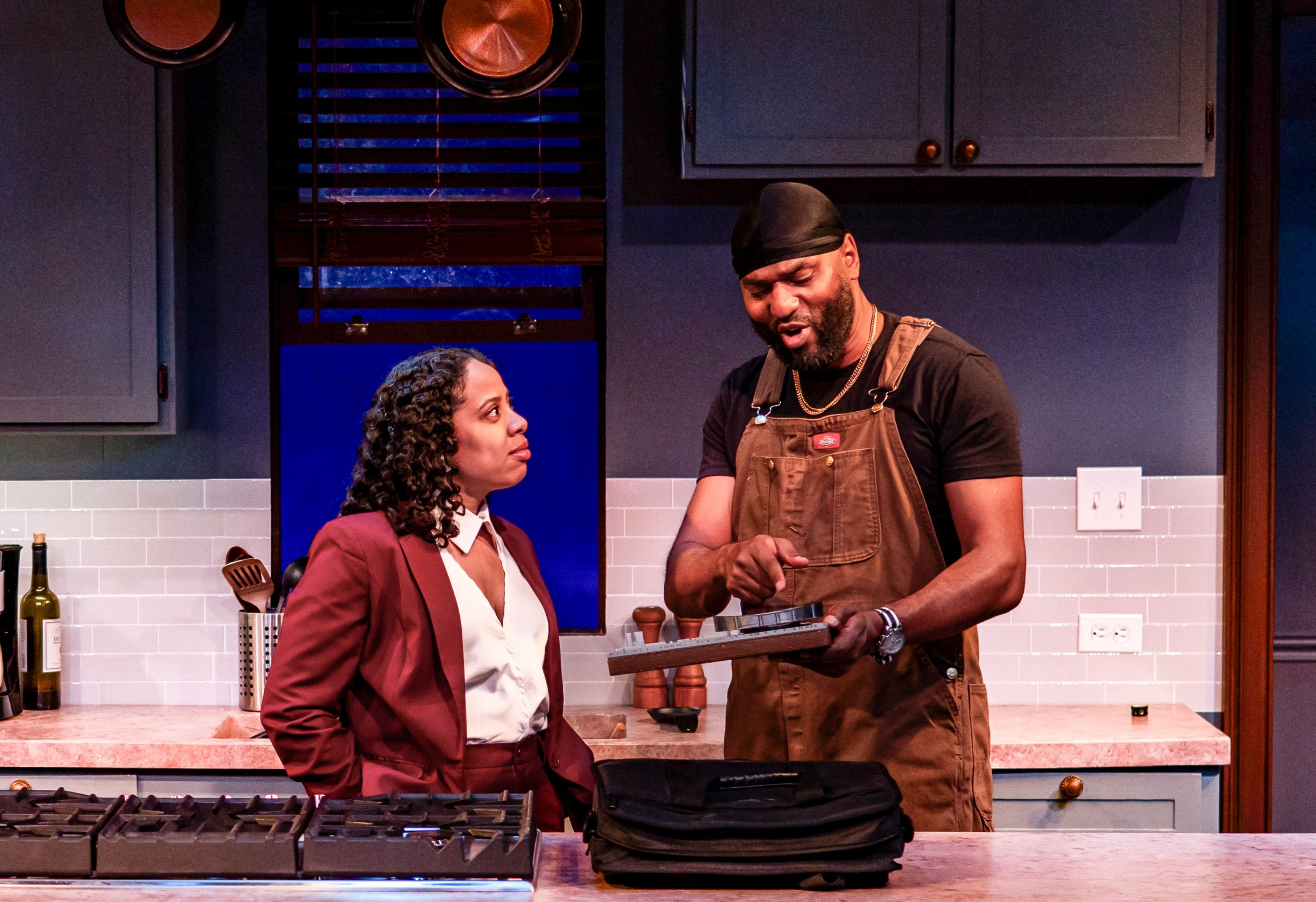
Taysha Marie Canales (Aisha) and Walter DeShields (Earl) in ArdenTheatre Company’s 2026 production of Good Bones. Photo by Ashley Smith, WideEyedStudios
One formula of American play puts a handful of people of different identities in a room (usually a living room), and makes them fight in the third act (for example, David Lindsay-Abaire’s Good People, Jeremy O. Harris’ Slave Play, and many of the plays of Bruce Norris). In general, this isn’t my favorite kind of play2 . But James Ijames’ Good Bones is a very well-done version of it—one with more heart than many others who ventriloquize politics. I preferred Ijames’ much wilder, more ambitious, more experimental Pulitzer Prize Winning Fat Ham, which thrums with a love of this art form—enough to blow away my (plentiful) cynicism. But I’m glad I saw this show—especially in the city where it’s (clearly, if not explicitly) set.
Good Bones, James Ijames’ new play, making it’s Philadelphia premiere, is about Aisha (a professional-class Black woman who grew up in the projects, played by Taysha Marie Canales) and her husband, Travis (a Black chef who grew up with money, played by Newton Buchanan). The pair has just bought a historic house adjacent to the projects where Aisha grew up. Professionally, Aisha does “community outreach” for a soon-to-be-built sports arena, which threatens to displace hundreds of Black families. Earl, a contractor who still lives in those threatened projects, is rehabbing their fancy kitchen. Over the course of the play, tensions grow between Aisha and Earl: Aisha believes that her work will improve a neighborhood that caused her immense childhood trauma; Earl believes that she is selling out his home. The play ultimately becomes a debate about community, and how it can both scar us and save us.
Though the script is largely successful, I found Arden Theatre’s production mixed. The central couple seemed like they were in different plays and often quite disconnected. The standout performance, though, was from Walter DeShields, who played Earl, the moral center of the play. Earl is unwilling to give up on the community he came from, and that devotion is ever-present in his performance. He is consistently funny, which is welcome because the production otherwise relies too heavily on yelling. His relationship with his college-aged sister Carmen (Kishia Nixon) is also a highlight. Younger and queer, she straddles the conflict between Earl and Aisha, valuing Earl’s commitment to their community, while also aspiring to the life Aisha has built for herself. Anytime Earl approaches self-righteousness, Carmen humbles him in the way only a little sibling can.
Though the play says it is set in an “unnamed city,” it is clearly Philly, echoing two fights in the last decade over stadium construction. I loved seeing this play in its city. I want more hyper-local theatre1 . I remember seeing Robert Askins’ The Carpenter at the Alley Theatre in Houston. It’s not an amazing play, but the audience lost it at a joke about a local grocery chain! Good Bones was an excellent example of theatre that speaks to its immediate community. I loved seeing it with a friend, a local organizer, who has fallen in love with Philly, despite my rage that they left Seattle (“I’ll die here,” they kept saying). Thank you for your warm welcome, Philadelphia!
Renee Gladman’s My Lesbian Novel
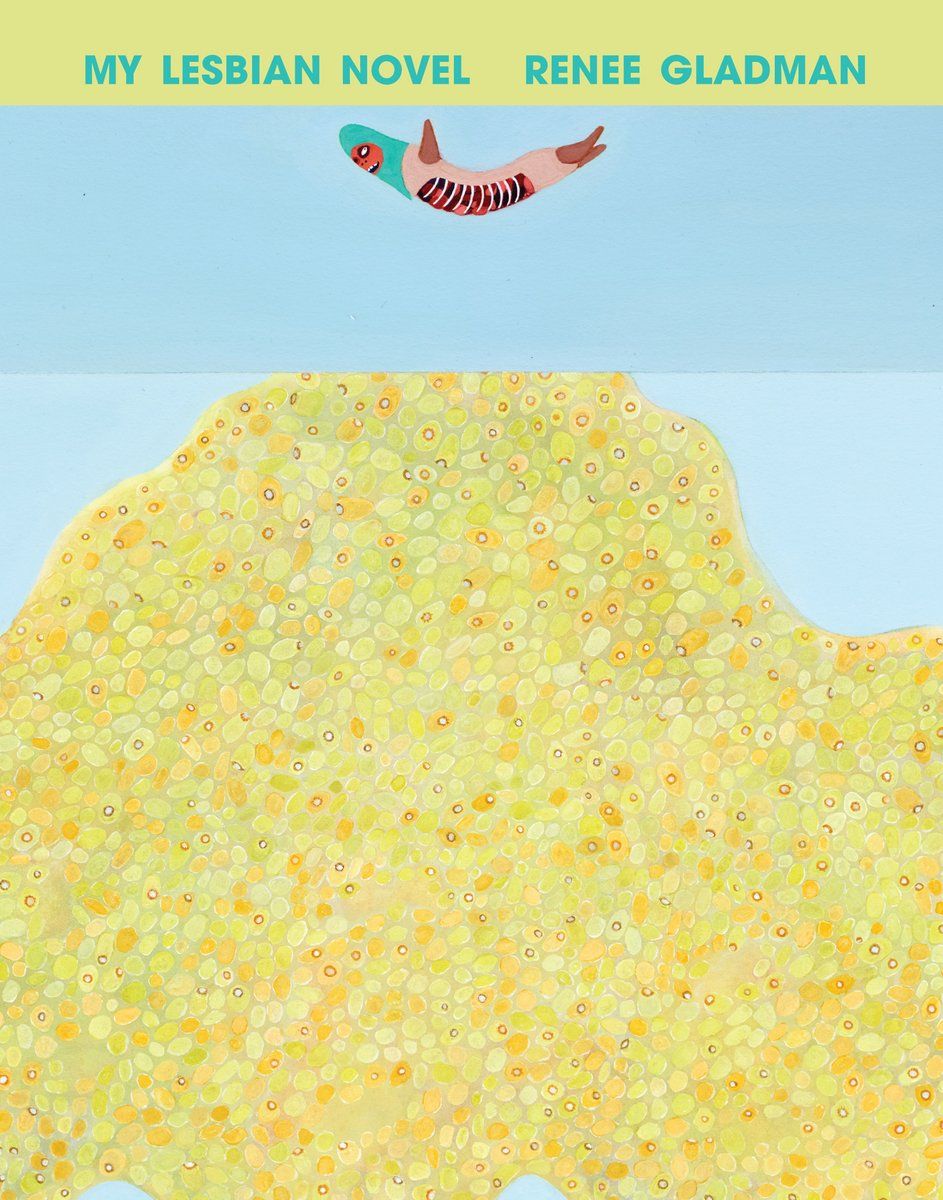
A few years ago, I stopped watching TV because I talked about it the way hard drinkers talk about going to the bar. To replace this habit, I started reading romance novels. After reading dozens, the only thing better than a smooth one is a (rare) really smart one. Enter Renee Gladman’s My Lesbian Novel, a metafictional romance novel, presenting a page-turner story, interspersed with a real-time interview with the author as she writes it.
Gladman, an experimental novelist and visual artist, came to the genre seeking a similar kind of respite: She began her deep dive into romance novels following the 2016 election and amidst a wave of Lesbian fiction full of trauma. She says, “I needed any characters I encountered—by either reading them or writing them—to be in a safe place, at home and nourished, when I was no longer with them.” Fueled by this desire, she becomes a “scholar” of the romance genre. She reads these novels critically…
Did I say that a large majority of books in the lesbian romance genre are poorly written? This is the case for hetero and other queer romances, too. It’s an asshole thing to say but no less true. The genre does not regard language as a living force, as an inhabitable space, a space for encounter.
…but also affectionately:
What keeps me coming back, even though aspects of the romance formula drive me crazy, is that the people who write these stories understand how beautiful women are. And there is no more perfect way this gets demonstrated than through the narration of the orgasm. How lovingly and with such great texture writers, even bad ones, describe this moment of surrender.
The novel-within-the-book is a dream to read: the story of an architect named June who “isn’t queer the way so many straight people are queer these days,” she’s “old-school straight with wild hair.” She’s in her thirties, “some years removed from hipsterdom.” She and her friends drink espresso and go to galleries and drink pink Cava like they’re “drinking light from roses.” Romance novels require aspirational narrators, and I immediately longed to experience my own skin, my own selfhood like June. She eventually enters into a longing romance with Thena, a British artist. Gladman gorgeously evokes the intoxicating pleasures of tumbling toward a love affair: “Breathing is not more important than the stillness my body needs to keep my heart in my chest. My reaction to her text is completely unreasonable.”
I also aspired to Gladman’s artistic self, as presented in the metanarrative—the romance between her and her art forms. In particular, I notice myself jealous of her ability to “sublimate,” which she defines as “going under,” “the way people describe hypnosis, as if you’re being pulled to a different field of consciousness.” She uses jazz as an example: “I mean, you can find this moment in every good jazz tune, a place where the instrumentalist goes under, crosses into freer territory, where the rules of what is and isn’t, of what’s inside and outside are malleable.” I long for this artistic experience; I think it's necessary for real experimentation. As a writer, I imagine finding it on day sixteen, all alone in some woods; when making performance, I’ve seen it arrive hours into yes-and-ing other artists. When I see the fruits of this kind of depth in a work of art, I get furious with envy. I need some woods; I need a rehearsal room.
My Lesbian Novel depicts two of the best feelings in the world: the bubbling desire of falling in love and the heady immersion of making art…or vice versa?
More Things!
I. Isabella Hammad’s precise and moving book-length essay, Recognizing the Stranger. I particularly loved her theory on the value of reading novels:
It’s a rare chance for concentrated solitude, to be neither working nor passively consuming the content of a screen but thinking deeply about experiences other than our own using some of the tools of our dream life, and listening carefully to the voices of others, in ways that ask for our imaginative participation and that might also shed light upon our own experiences of being alive on this planet.”
II. In Philly, I saw the benefit show No More Dysphoria at “The Church,” a legendary punk venue in the basement of a Unitarian church, which my friend described as a home to sweet church ladies, yoga classes, socialist meetings, and punk shows (my kind of church!). I enjoyed the scene’s earnestness: anarchist books and (delicious) vegan Peruvian food for sale in the back, friendly people, a girl flashing her tits at the all-femme band. I’m a much better literary/dance/theatre critic than I am a music critic, so forgive this less-than-thorough discussion of the music itself: I loved Frances Quinlan’s growly, heartfelt singer-songwriter set; Universal Girlfriend was sexy and virtuosic (I’m told they’re a supergroup!); Hit Like a Girl was playful; Oceanator was rowdy and hot.
III. I did not enjoy Wuthering Heights, but I DID enjoy reading people being smart and mean about it on the internet:
Sam Brodojan writes, “I showed up to the screening for the same reason a child puts their hand on a hot stove,” and “This Schrödinger’s Conservative fantasia is Fennell’s bread-and-butter.” The most brutal line, perhaps, is a rare compliment: “The weather is terrific.”
I also loved Heather Parry’s review, which was equally mean, but also rife with deep knowledge of the Brontës and a heartfelt love of the novel: “It’s the cinematic equivalent of one of those over-decorated cakes on Instagram that looks delicious until you realise it’s 90% American buttercream.”
IV. Omar El Akkad’s exquisite One Day, Everyone Will Have Always Been Against This, which I swallowed overnight as research for a soon-to-be-published article. Some favorite passages: On leaving behind The West,
The walking away is not nihilism, it’s not cynicism, it’s not doing nothing—it’s a form of engagement more honest, more soul-affirming, than anything the system was ever prepared to offer.
And a vital mantra: “Courage is the more potent contagion.” (Also, his interview on the Between the Covers podcast is incredible).
V. Washington D.C.’s Hirshhorn Museum, where I saw some very special contemporary art. Here are some highlights:
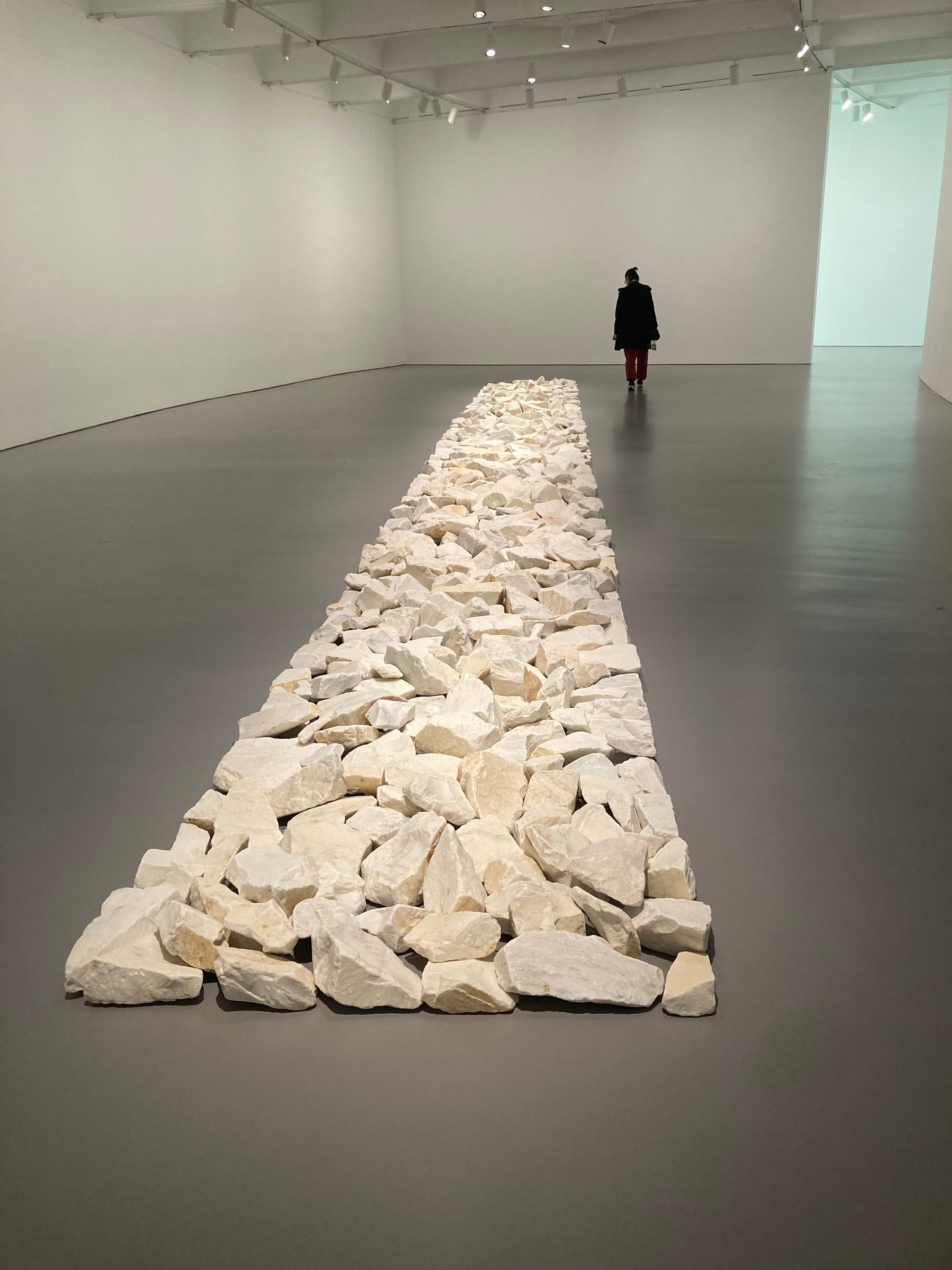
“Carrara Line.” Richard Long (1985)
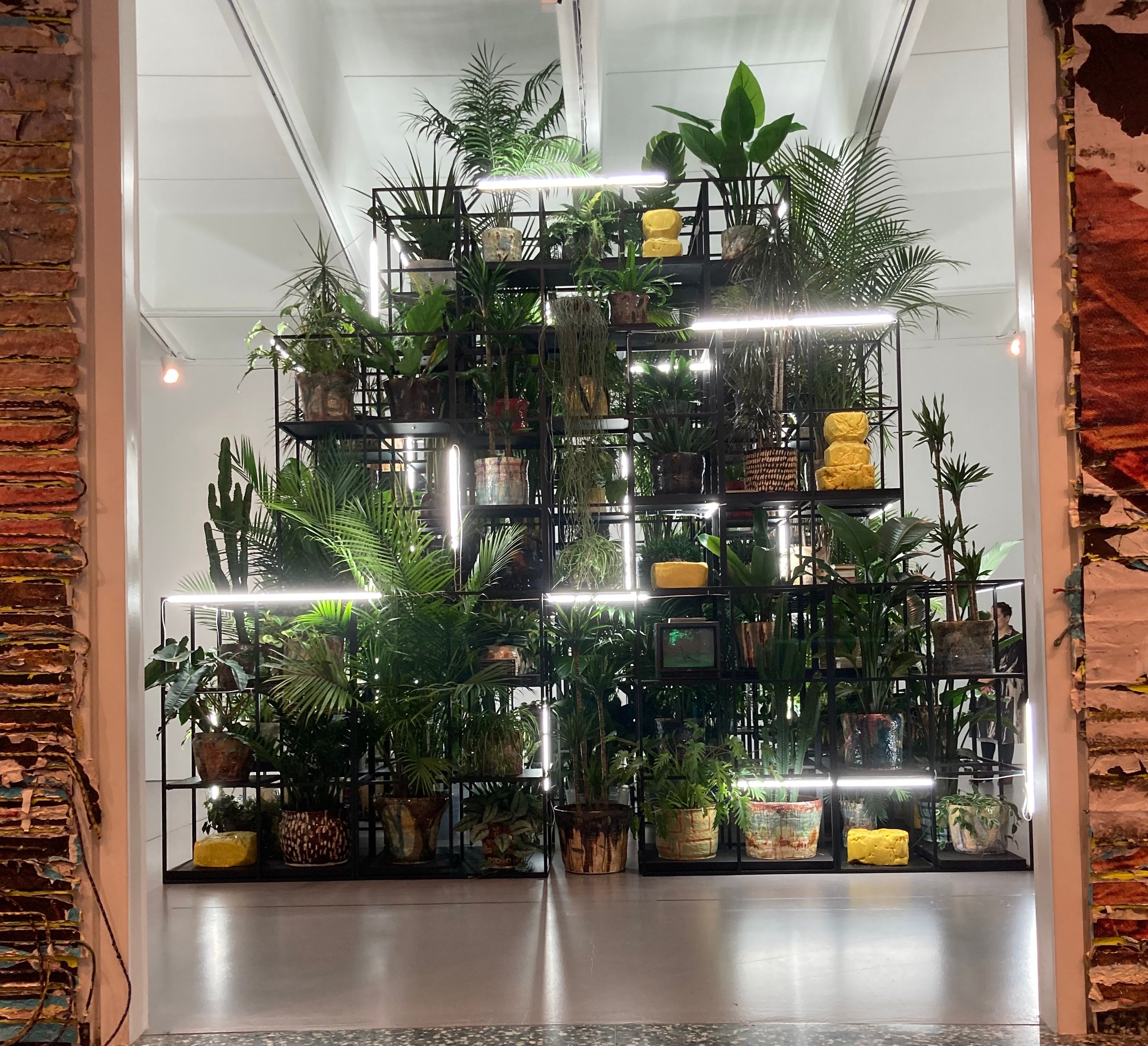
“The Changes.” Rashid Johnson (2005).
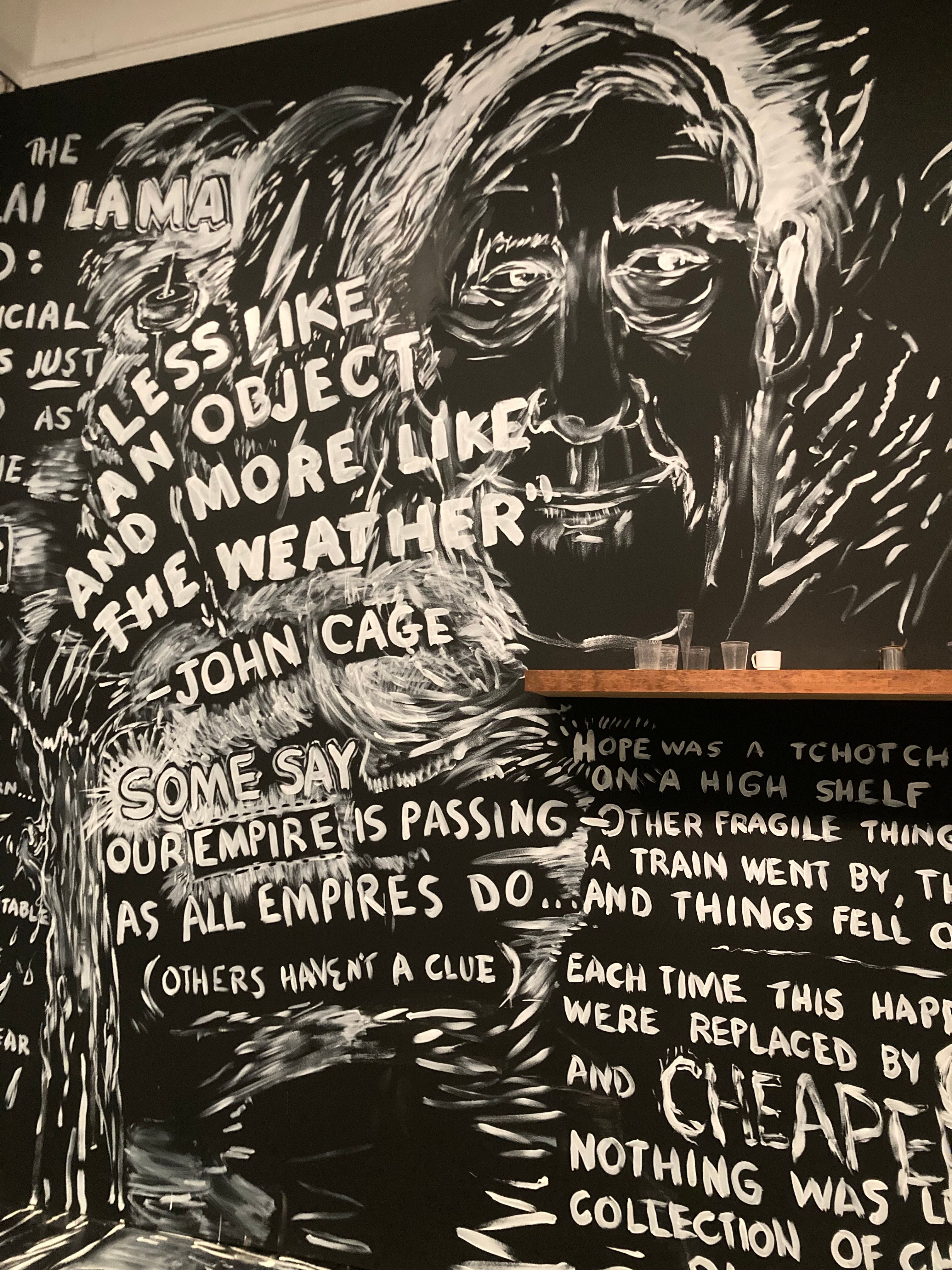
“Four Talks.” Laurie Anderson (2021).
1 Lighting Designer Kate McGee writes about this in their excellent piece “How to fix the American Theater: or 45 humble suggestions for the future.”
2 I don’t feel this way, however, about what I would argue is the ur-version of this genre of play: Lorraine Hansberry’s The Sign in Sidney Brustein’s Window. I have a great soft spot for this play, though it’s far from well-made because she wrote it as she was dying, at age 34. I wish she had survived to complete it; I wonder if it would have had the clockwork quality of A Raisin in the Sun.